.png)
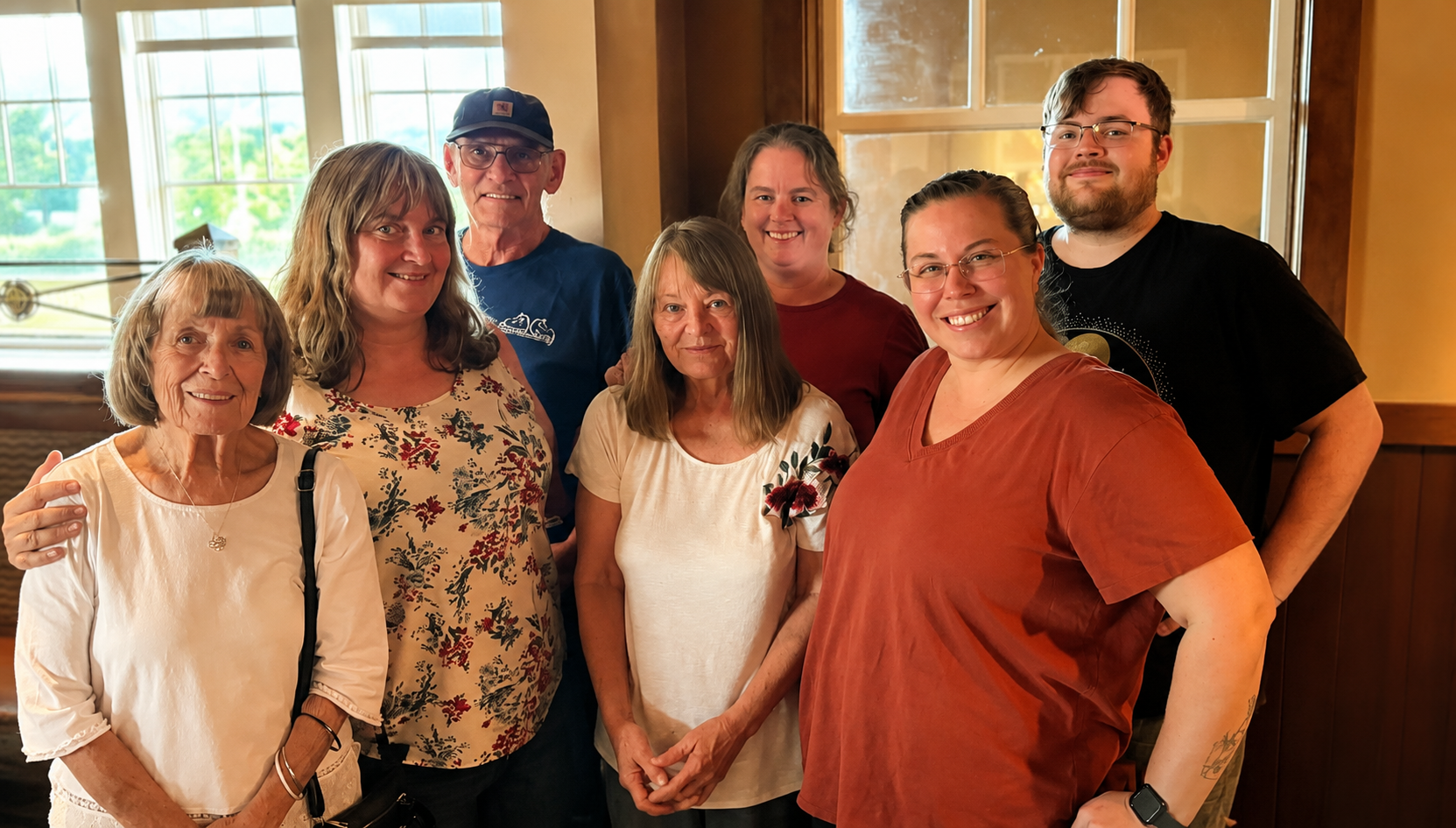
Last weekend, we celebrated my mom's 70th birthday.
As I looked around the table at Red Lobster - my mom's favorite restaurant - I found myself thinking less about the number and more about what an incredible gift the day really was. At 52 years old, I was celebrating my 70-year-old mother with her own 89-year-old mother sitting just a few feet away. That isn't something everyone gets to experience.
Many people my age have already lost one or both parents. Some have become the oldest generation in their family without ever expecting it to happen so soon. Some have lost their spouses (and not because of an age gap relationship like me), and even some are gone themselves. Yet here I am, incredibly fortunate to still have my mother and adoptive father. Even more remarkably, both of them still have their mothers - my grandmothers. My mom's mom is, as mentioned 89. My dad's mom is 96!
When you stop to think about it, that's pretty extraordinary.
Growing up, I don't think I realized how much that shaped my understanding of what "old" meant. Genealogy has only reinforced it. My grandmother is 89. Her older sister is still with us at 91. Their mother—my great-grandmother Ruby—lived to be 83. I remember being genuinely upset when she died because, in my young mind, 83 simply wasn't old. There was more to it but the age but I honestly remember thinking that wasn't old. I realize now how unusual that probably sounds, but in the context of my family, it made perfect sense.
Like every family tree, ours has its exceptions. Ruby's husband died of cancer at just 55. My grandmother's brother died at just 55 in a plane crash. Both of the grandfathers I grew up with died in their early 60s from cancer. My own biological father died unexpectedly in a motorcycle accident at 61. But even then, the generations surrounding them often lived long lives. Ruby's mother-in-law, Winnie, lived to be 94. My biological father's parents both lived to nearly 80. My paternal great-grandmother, Gracie Spenser, celebrated her 103rd birthday.
As I've spent years researching my family tree, I've noticed another pattern as well. The women in my family often lived remarkably long lives, while many of the men never had the same opportunity. Some were taken by cancer or heart disease. Others by accidents. It isn't a scientific observation, just one family's story, but after tracing generations of lives, those patterns become difficult to ignore.
When you spend enough time with birth records, census records, obituaries, and gravestones, longevity stops feeling like an exception and quietly becomes your expectation.
I'm 52 now.
That's an age that felt unimaginably grown up when I was a child. It's also an age where many people are beginning to lose parents, spouses, siblings, and lifelong friends. Rationally, I know life offers no guarantees. My own family tree reminds me of that just as much as it reminds me of longevity.
And yet...
Emotionally, I still find it difficult to imagine my parents reaching the end of their lives in the next ten or fifteen years. Not because I believe they're immune to time, but because my own experience has taught me something different. When seventy is surrounded by eighty-nine, ninety-four, ninety-six, and one hundred three, it simply doesn't feel old. Eventually, you stop studying the ages of your ancestors and start comparing them to your own. Somewhere along the way, history becomes a mirror.
Lately, I've found myself noticing little reminders that I'm not 22 anymore. Running after a loose horse isn't something I can do without thinking about it first. A full day outside in the summer heat leaves me more exhausted than it once did. Stairs have become my nemesis thanks to old knee injuries and the arthritis that has quietly settled in over the years. None of these changes happened overnight. They arrived so gradually that I barely noticed them until one day I realized I wasn't doing some of the things I once took for granted.
Statistics tell us what happens across a population. Families tell us what feels normal. Genealogy stretches that perspective even further. It reminds us that every family has its own story, its own hardships, and its own remarkable examples of resilience. Those stories don't predict our future, but they quietly shape what we expect it to look like.
Last weekend wasn't just a birthday party. It was four generations sharing a meal together. It was another year of stories being told around the table. It was a reminder that every birthday is a gift, no matter the number on the cake. And for that, I feel incredibly fortunate.
Happy 70th Birthday, Mom. Here's to many more birthdays, many more stories, and many more opportunities to gather around the same table together.