
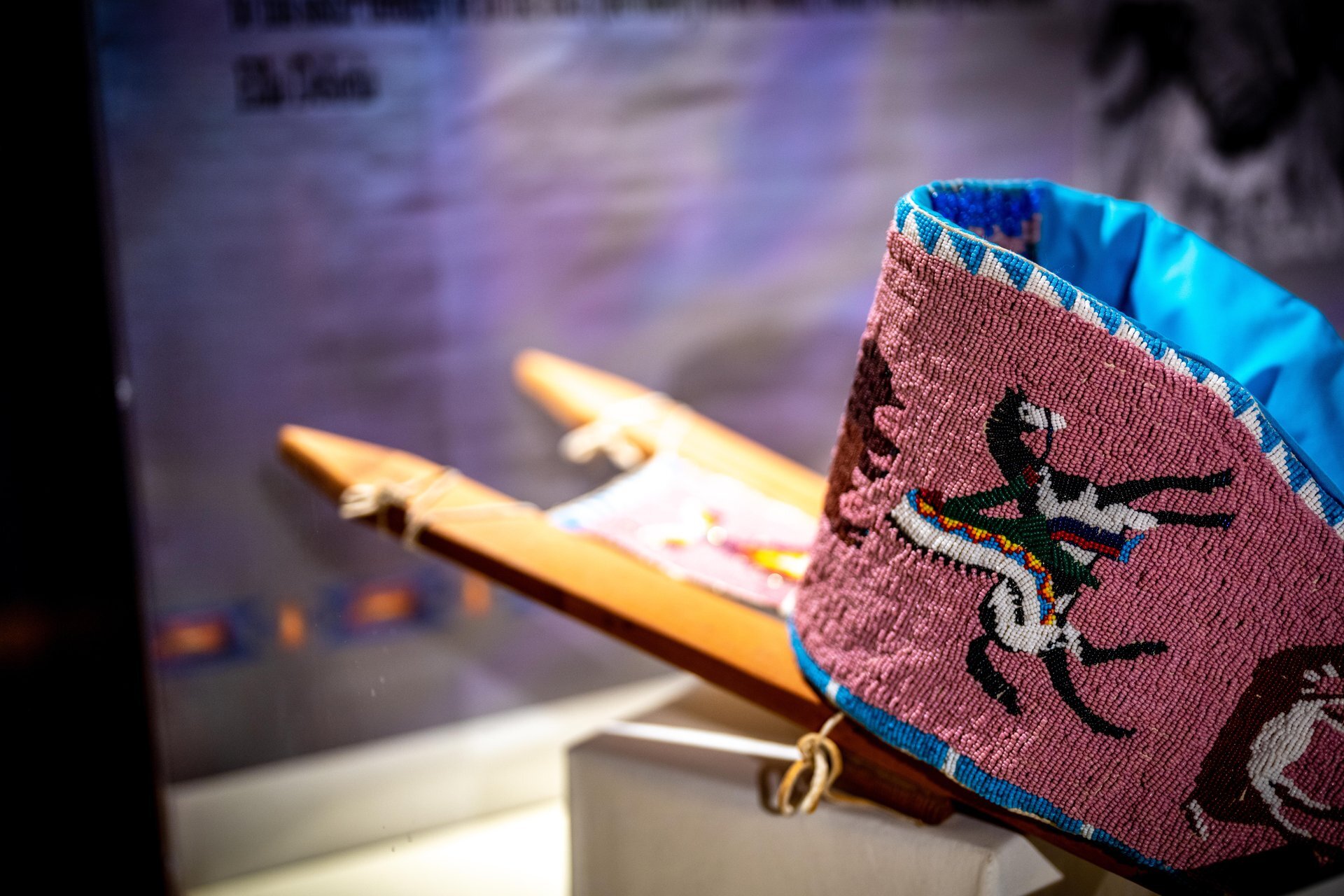
The Year of Reconciliation, the history of South Dakota's tribal nations, and the enduring relationship between the Lakota people and the Horse Nation.
When I moved to South Dakota in 2003, one of the first things I learned about my new home was that it celebrated Native American Day instead of Columbus Day. South Dakota had become the first state to make that change in 1990, and for many years, it stood largely alone in doing so.
It was one of those things about South Dakota that stuck with me. In a state where Native American history is so deeply intertwined with the land, the communities, and the culture, recognizing Indigenous peoples rather than celebrating Columbus seemed particularly appropriate.
Over the years, I've become more familiar with the state's nine reservations, its tribal nations, and the importance of Lakota, Dakota, and Nakota history to the region. And, given my lifelong interest in horses, I've been especially interested in the relationship between the Lakota people and the horse.
But until recently, I hadn't understood the circumstances that led South Dakota to establish Native American Day in the first place. What I didn't know was that it was part of a much broader initiative called the Year of Reconciliation, an effort to address the historical and continuing divisions between Native and non-Native South Dakotans.
The Year of Reconciliation
In 1989, South Dakota celebrated its centennial of statehood. The following year marked a very different anniversary: 100 years since the Wounded Knee Massacre, when hundreds of Lakota men, women, and children were killed by U.S. troops.
Native American journalist Tim Giago, founder of the Lakota Times, recognized the significance of those anniversaries. He challenged Governor George S. Mickelson to use the occasion not simply to commemorate the past, but to begin addressing the relationship between Native and non-Native people in South Dakota.
Mickelson agreed, and 1990 became the Year of Reconciliation.
In a December 19, 1989 letter to Giago, Mickelson acknowledged that strained relationships between Native and non-Native South Dakotans had troubled both his administration and that of his father, who had served as governor decades earlier.
What struck me about that correspondence was the recognition that reconciliation needed to be more than a proclamation. The governor called for education, communication, cooperation, and measurable progress.
The initiative included the creation of a reconciliation council and, perhaps its most enduring public symbol, the establishment of Native Americans' Day as an official state holiday in place of Columbus Day.
On October 12, 1990, the first Native Americans' Day celebration took place at Crazy Horse Memorial, where Mickelson spoke about the importance of recognizing Native American leaders and confronting the history of Wounded Knee.
Of course, a holiday cannot undo generations of conflict, dispossession, or inequality. And reconciliation is not something accomplished in a single year.
But understanding the intention behind the holiday changes how I think about it. It wasn't simply a decision to celebrate one history instead of another. It was part of an effort to acknowledge a difficult shared history and create a different relationship going forward.
Nine Reservations and a Much Larger History
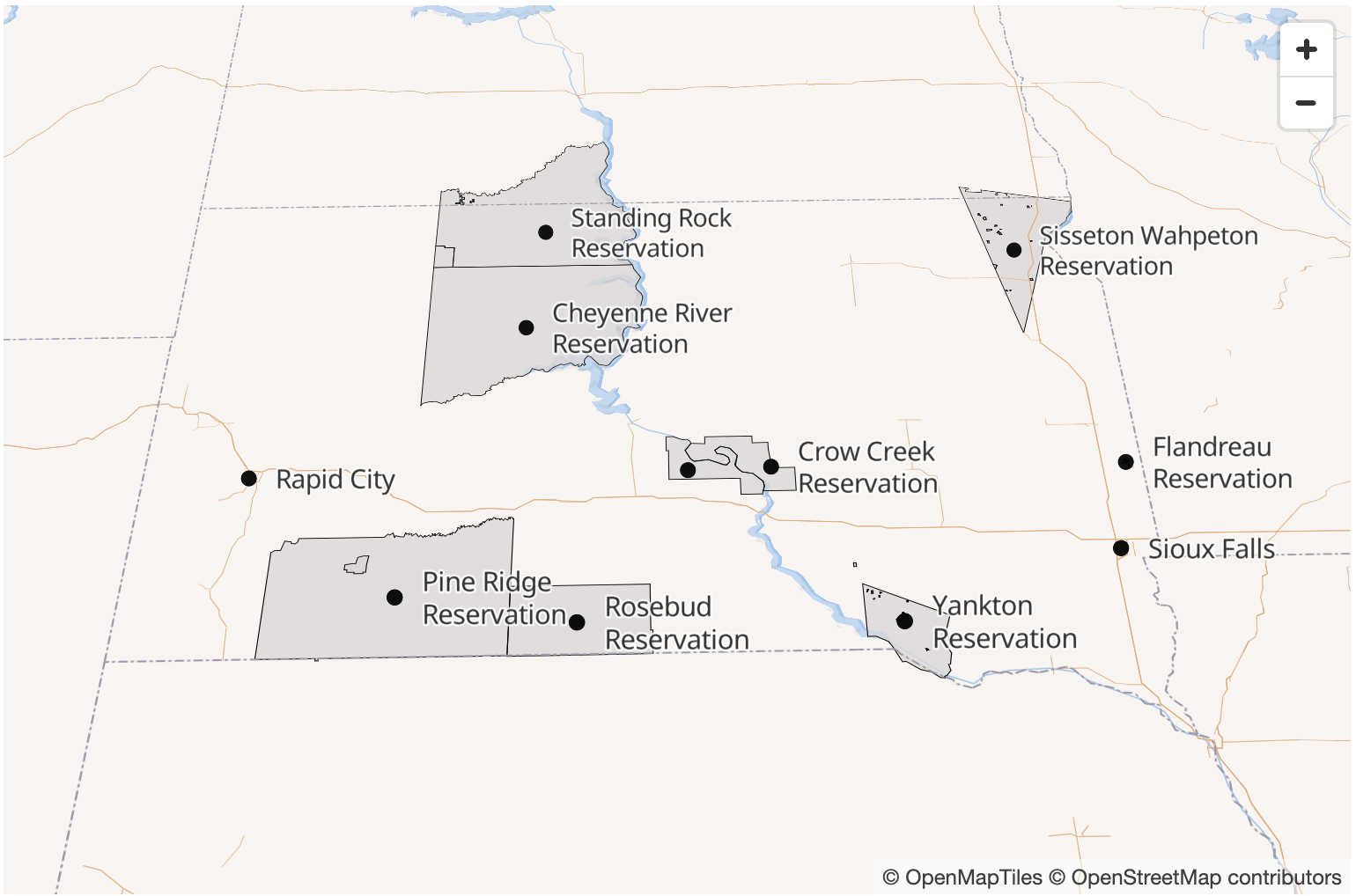
South Dakota is home to nine federally recognized tribal nations and nine reservations. Together, the reservations account for approximately 12% of the state's land area.
That's a significant portion of South Dakota, but the history of the Lakota, Dakota, and Nakota peoples extends far beyond today's reservation boundaries.
The 1868 Fort Laramie Treaty established the Great Sioux Reservation across an enormous portion of what is now western South Dakota, including the Black Hills. Subsequent federal actions and agreements reduced and divided those lands, creating much of the reservation geography we recognize today.
Those boundaries are part of a much longer history involving treaties, land loss, federal policies, and the continuing assertion of tribal sovereignty. Sovereignty is important here. South Dakota's tribal nations are not simply cultural communities or historical populations. They are governments with their own leadership, laws, institutions, and responsibilities to their citizens.
I think our understanding of Native American history too often stops somewhere in the nineteenth century. We learn about treaties, battles, and reservations, but not nearly enough about the people, governments, languages, and cultures that continue today.
Native American Day should be about that continuing history, too.
And for me, one particularly fascinating part of that history is the horse.
The Horse Nation
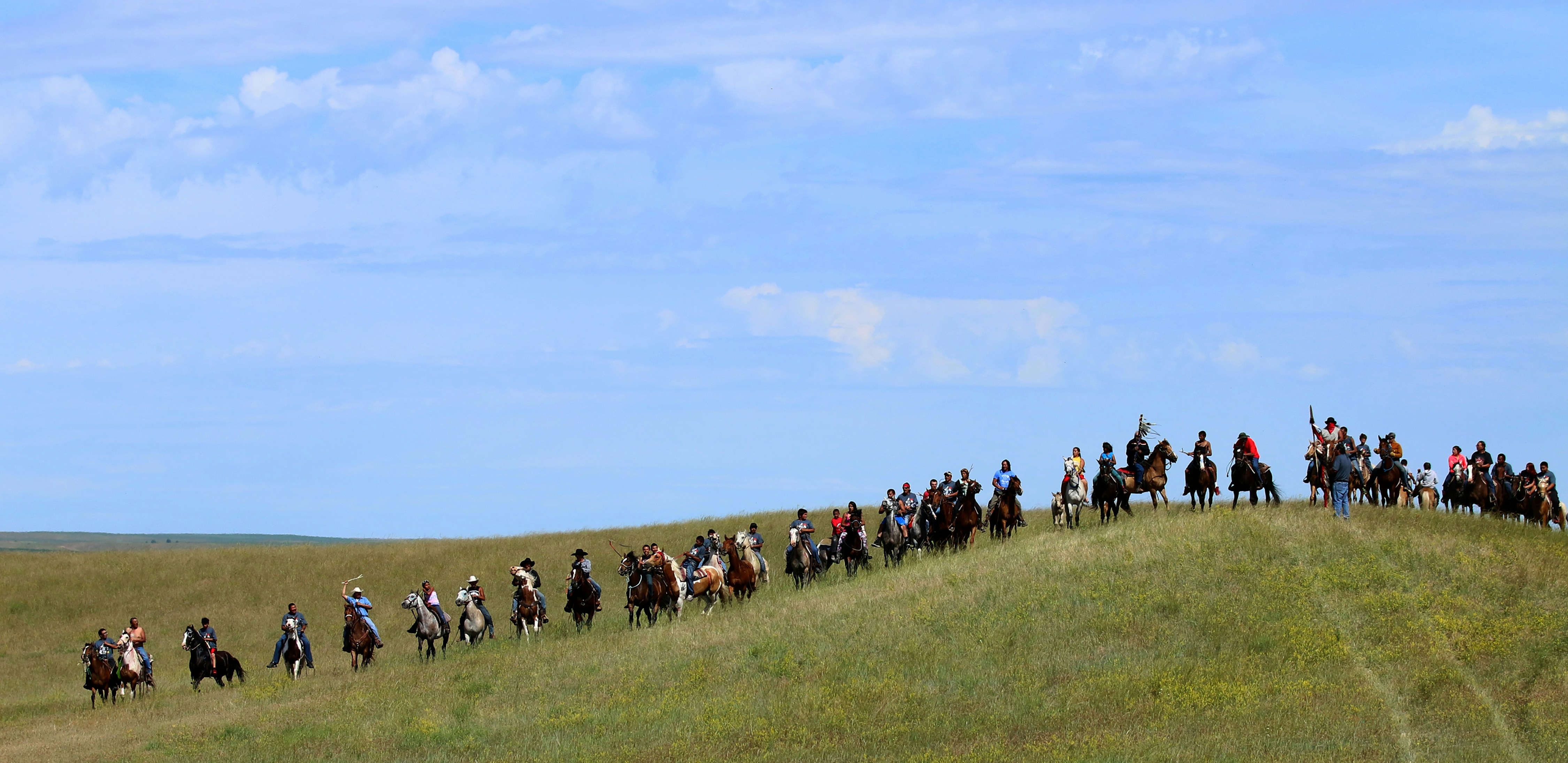
Anyone who knows me knows that I can find a way to bring almost any subject back to horses. This one doesn't require much effort. Horses have a profound place in Lakota culture. Their introduction and spread across the Great Plains transformed mobility, hunting, trade, warfare, and daily life.
But describing horses only in terms of what they allowed people to accomplish misses something fundamental about their cultural importance.
In Lakota tradition, the horse is understood as part of the Horse Nation, or Šungwakaŋ, with spelling varying among written conventions. The relationship goes beyond the Western concept of owning an animal. It involves kinship, respect, spirituality, and responsibility.
A 2023 scientific study developed with Indigenous researchers and Lakota knowledge keepers describes horses as sacred relatives. In that understanding, referring to a horse as ours conveys responsibility for that relative, rather than simply possession.
That distinction is fascinating to me.
We often describe horses in terms of what they do for us. We ride them, train them, breed them, show them, work with them, and sometimes rescue them. But there's another way to understand the relationship: not simply as what the horse provides to the person, but as a relationship with responsibilities in both directions.
I don't pretend that my experience with horses gives me an understanding of Lakota spiritual traditions. It doesn't. Those traditions belong to the people who carry them. But I can appreciate the idea that our relationship with horses should be rooted in respect and responsibility.
And I find it meaningful that the Horse Nation remains an important part of Lakota cultural identity today, rather than merely a chapter in the history of the American West. And while I've long been interested in Lakota horse culture, the research into the Horse Nation and the earlier history of horses on the Great Plains has given me even more to think about.
Perhaps that's one of the most valuable purposes of a day like this.
Not simply to acknowledge history, but to keep learning it. To recognize that the stories we inherit are not always complete, and that understanding another culture requires listening to the people who carry its knowledge.
South Dakota's decision in 1990 was an important step. But the spirit of reconciliation asks for something ongoing: curiosity, respect, an honest understanding of history, and a willingness to learn.
That's worth remembering long after the holiday is over.
Happy Native American Day.
Hero image: Photo by Travel South Dakota.
Sources and further reading
- Tim Giago and George S. Mickelson, 1989 correspondence: “We Must Reconcile: How Native American Day Came About in South Dakota”. Includes the governor's December 19, 1989 letter and historical background on the Year of Reconciliation.
- South Dakota Public Broadcasting: Reporting on the origins of Native American Day. Includes Tim Giago's recollections and Governor Mickelson's remarks at the 1990 celebration.
- South Dakota state government: In South Dakota, We Celebrate Native American Day. Confirms the state's first-in-the-nation designation in 1990.
- South Dakota News Watch: A Guide to South Dakota's Nine Native Tribes. An overview of the nine tribal nations, reservations, and their geography.
- Taylor et al., Science, March 2023: Early Dispersal of Domestic Horses into the Great Plains and Northern Rockies. The original scientific research, developed with Indigenous partners, examining early horse history and the Lakota relationship with the Horse Nation.
.png)